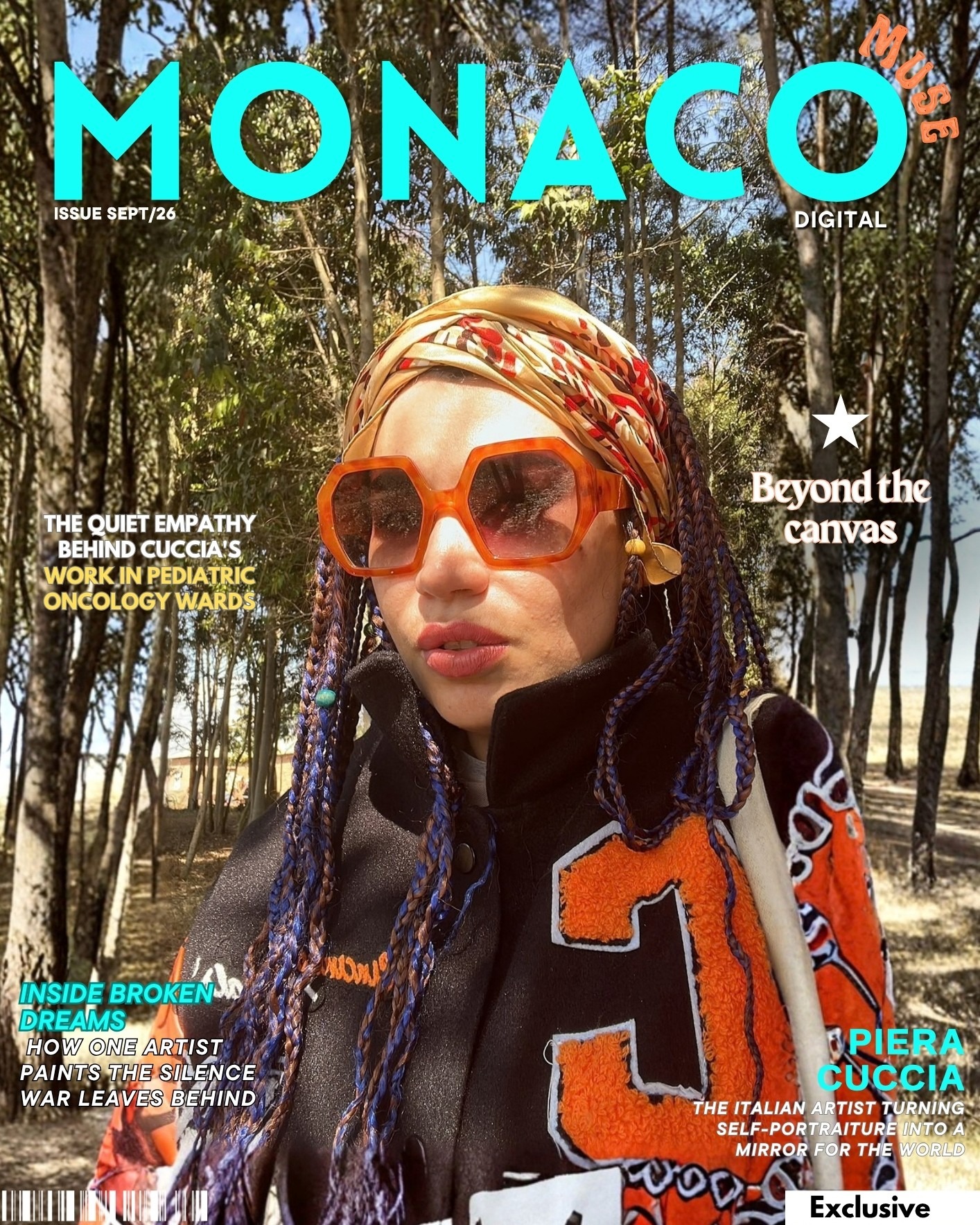

How an Italian photographer turned self-portraiture into a language for grief, hope, and the quiet architecture of feeling
There is a particular kind of courage required to make yourself the subject of your own work, again and again, until the boundary between artist and image dissolves entirely. Piera Cuccia has built a career on that courage. For over a decade, the Rome-born visual artist has turned the camera — and increasingly, the brush — toward herself, not out of vanity but out of necessity, using her own body as a vessel for stories that belong to everyone.
To call Cuccia a photographer is accurate but incomplete. Photography, for her, has never simply been about capturing what is in front of the lens. It is a method of excavation — a way of sitting with memory, identity, and emotion until something universal rises to the surface. Her self-portraits are staged with the precision of a director and the vulnerability of a diary entry, each frame asking the viewer to consider not just who she is, but who they are.
A Path Shaped by Curiosity
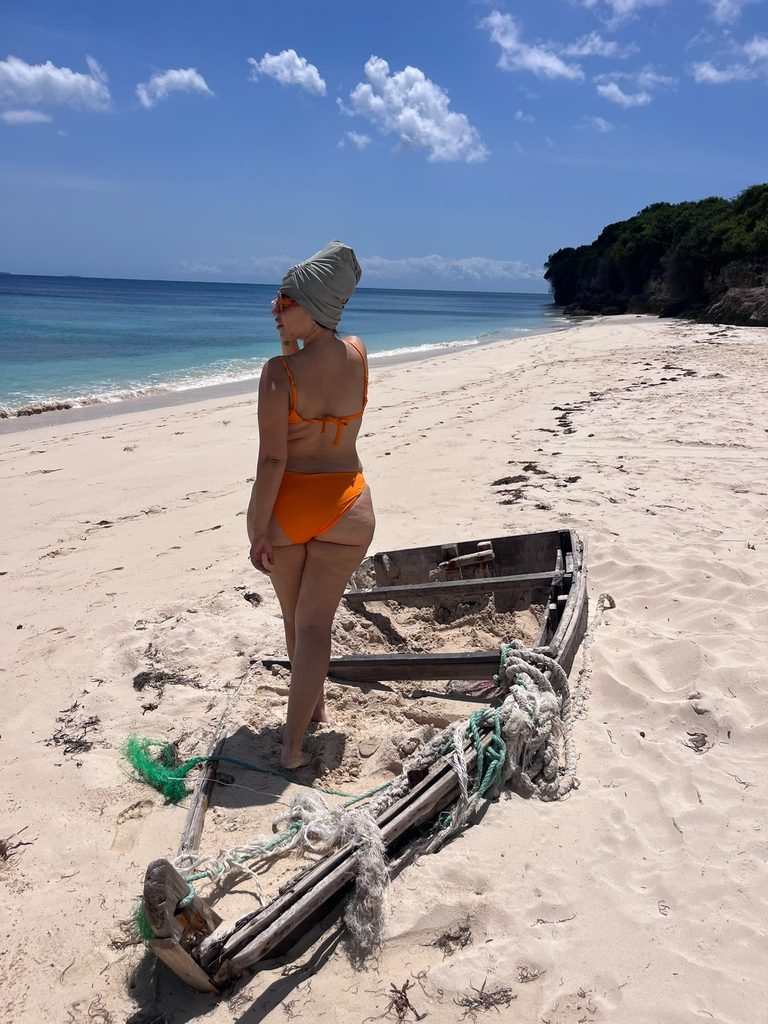
Cuccia’s road to art was never a straight line, and that may be exactly why her work resists easy categorization. After her formative years at the Art High School in Trapani, she went on to study Communication Sciences at Roma Tre University, followed by a Master’s in Media Relations with an international focus at the Italian Society for International Organization. It is an unusual pedigree for a visual artist — more newsroom than atelier — but it shows. Cuccia thinks in narrative arcs and cultural fluency as much as in composition and light. She understands, perhaps better than most working in self-portraiture today, how an image travels across borders and what it takes for a deeply personal picture to land as a shared one.
That sensibility has carried her far beyond Italy. Her work has been shown at major museums and art fairs in Dubai, Beijing, New York, Monaco, and Venice — a circuit that speaks to how fluently her visual language crosses cultural lines, even when the starting point is something as private as her own reflection.
Broken Dreams: Beauty as a Witness to War
If there is a single work that crystallizes Cuccia’s ambition, it may be Broken Dreams, a piece that confronts the human cost of war not through documentary shock, but through restraint. Rather than depicting conflict directly, Cuccia renders its aftermath — the emotional residue left behind, the invisible wounds that outlast the headlines. It is a piece built on absence as much as presence, and it announced her as an artist unafraid to let beauty carry the weight of something unbearable.
This is, in many ways, the throughline of her entire practice: identity, memory, and the fragility of the self, treated not as abstract themes but as lived, felt experience. Her body becomes both subject and instrument, a surface on which larger questions about contemporary existence are quietly written.
Le Fleur: A Return to Softness
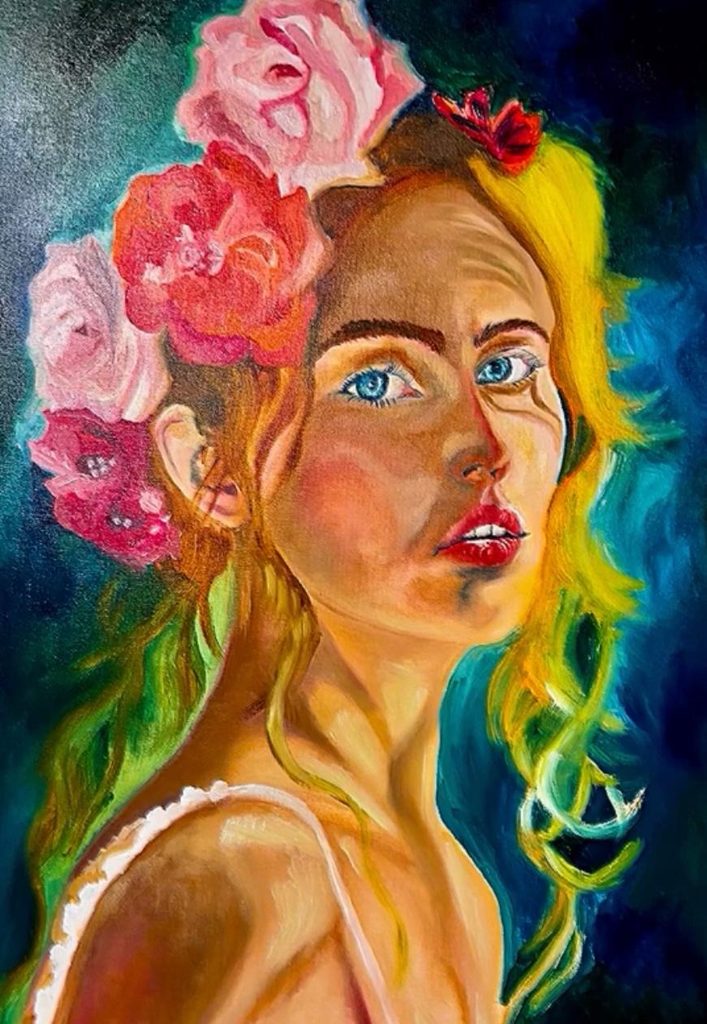
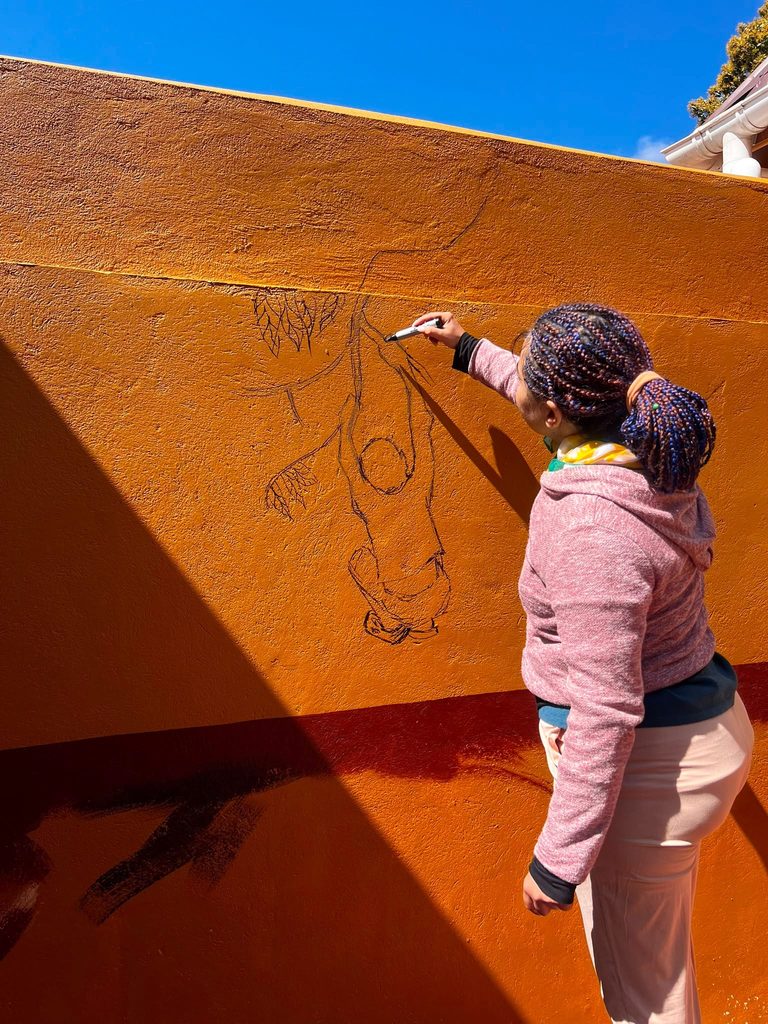
Her recent painting Le Fleur — oil on canvas, 50 by 70 centimeters — marks a gentler register, though no less intentional. Here, flowers become a vocabulary of their own, standing in for tenderness, affection, and a femininity still tethered to youthful innocence. The central figure drifts through what feels like a suspended dream, carried along by a background in motion, as though emotion itself had texture and current.
It’s a portrait of a woman finding her way back to herself — not through resolution, but through surrender to feeling. Cuccia seems less interested in offering the viewer an answer than in extending an invitation: to notice the same tenderness and quiet strength inside themselves that flowers, in her hands, have come to represent. The painting functions as a kind of emotional threshold, holding open a space between what is visible on the canvas and what is felt in the body of whoever stands in front of it.
An Ethics of Empathy
What ultimately distinguishes Cuccia isn’t only her fluency with a camera or a brush — it’s the empathy that radiates outward from her work into her life. Alongside her artistic practice, she volunteers in pediatric oncology wards, a commitment that echoes the same tenderness found in her canvases and photographs. It would be easy to treat this as a footnote to her art. It isn’t. It’s the same instinct, applied twice: the belief that attention, closely and honestly paid, is itself a form of care.
In an art world often preoccupied with spectacle, Piera Cuccia has staked her claim on something quieter and, arguably, harder to achieve — the ability to make the deeply personal feel universally recognizable. Whether she is standing in front of the lens or stepping back from the canvas, her work keeps asking the same tender question: if you really looked at yourself, what would you find?