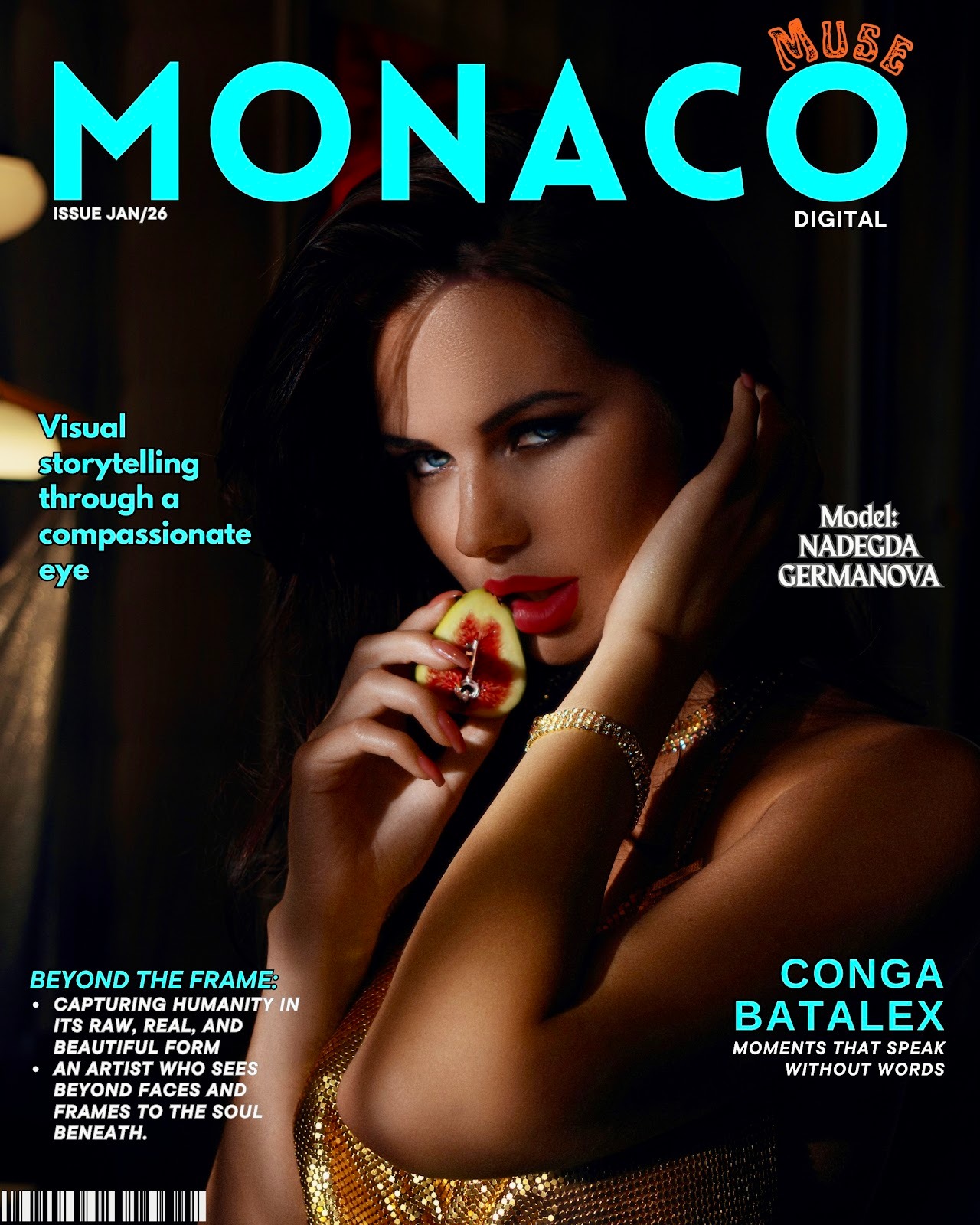



There are artists who document the world, and there are artists who reveal it. Conga Batalex belongs unmistakably to the second kind. His work does not merely show what is in front of the camera — it opens a window into how the world feels. Through his lens, moments become stories, colors become emotions, and faces become living poetry. He invites his audience not only to look, but to remember, to pause, and to feel.
Conga Batalex’s journey as an artist began with a simple instinct: curiosity. He has always been fascinated by people — the way they move, the way they exist inside their own thoughts, and the silent conversations happening behind their eyes. This curiosity, paired with a deeply compassionate sensibility, has shaped his signature visual language. His images are not staged spectacles or ornamental aesthetics. They are human — vivid, imperfect, and profoundly real.

What sets Conga apart is his devotion to storytelling. Every frame has intention. Every composition breathes. He doesn’t rush to capture moments; he listens to them first. Whether photographing the vibrancy of street life, an intimate portrait bathed in soft light, or the grand presence of a striking persona, he searches for feeling rather than perfection. His subjects are never reduced to objects of beauty. They are carriers of stories, fragments of experience, and reflections of life itself.
Color plays a powerful role in his work. Some frames explode with vibrancy — bursting reds, electric blues, golden sunlight — while others whisper in muted tones and gentle shadows. In both extremes, the purpose remains the same: to reveal rather than decorate. He uses color the way a writer uses metaphor, not as a surface element but as a deeper layer of meaning. In his hands, even silence has a hue.

There is also a rawness to his vision that refuses artificiality. Conga is not interested in polishing reality until it becomes unrecognizable. Instead, he leans into authenticity. Wrinkles, unposed gestures, tears, laughter, exhaustion, joy — everything belongs. His work reminds us that humanity is not flawless, yet it is exactly this unfiltered honesty that makes it beautiful. His photographs are less about glamour and more about presence — the presence of life happening, unedited.
Viewers often describe an uncanny familiarity when they look at his frames. His images feel like memories — something you have lived, or something you wish you had. This is perhaps the greatest compliment to his craft. He does not simply record moments; he activates them. He transforms them into emotional mirrors where audiences see their own experiences reflected back at them. A stranger’s smile feels like someone you once knew. A fleeting moment on a street feels like a chapter from your own story.

Conga Batalex’s love for storytelling extends beyond visual beauty. It is rooted in empathy. He approaches his subjects with respect — whether they are models on grand sets or ordinary people in everyday environments. There is no hierarchy in his lens. Each person becomes significant simply because they exist. This sensitivity gives his work its pulse. His art is not about displaying the external world; it is about honoring the inner one.
In an era dominated by instant images and quick attention spans, Conga’s work invites slowness. It asks the viewer to linger, to take a breath, to sit inside a frame for a moment longer than they usually would. His photographs feel alive because they are allowed space to breathe. They offer depth in a culture obsessed with surfaces.
Conga Batalex is more than an artist; he is an observer of life and a translator of emotion. His lens is not a barrier between him and the world — it is a bridge. Through it, he continues to build connections between people, places, and the quiet truths that unite them. His vision is raw, real, compassionate, and beautifully human. And in a world that often forgets to feel, his work is a reminder of how powerful it is to truly see.
Credits:
PHOTOGRAPHER: @conga_batalex_photography
Website: congabatalex.com
MODEL: @nadezhda.germanov